1800W Double-Pan Rolled Ice Cream Machine for Rush Hours
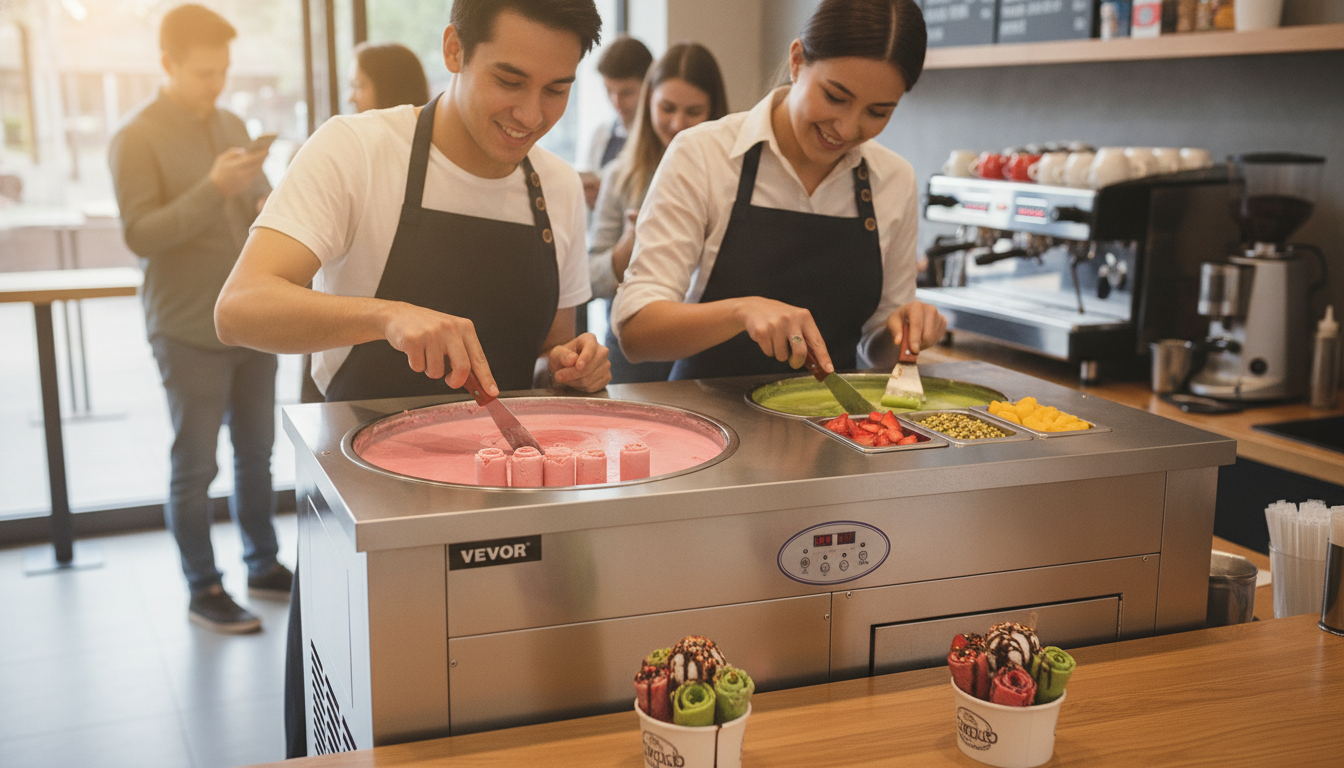
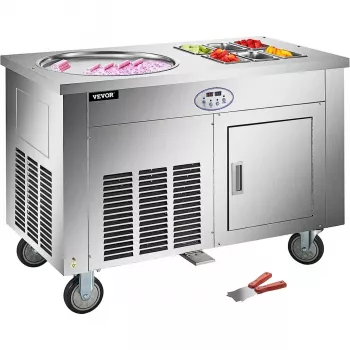
1800W Commercial Double Pan Fried Ice Cream Machine: Fast Batch Rolls for Busy Counters
A double-pan fried ice cream station helps serve more customers without sacrificing texture or presentation. This 1800W commercial unit is built for quick freeze-down, efficient workflow, and consistent results—ideal for kiosks, cafés, dessert bars, and event service that needs steady throughput.
What a Double-Pan Fried Ice Cream Station Changes in Service
When rolled ice cream becomes a steady seller, the slowest step is usually waiting for the plate to recover its cold surface. A double-pan layout addresses that bottleneck in a practical way.
- Two freezing pans support parallel prep: one pan can chill while the other is being portioned, chopped, and rolled.
- Reduces bottlenecks during rush periods by splitting tasks between flavors, toppings, or operators.
- Improves order flexibility for mix-ins and custom builds without slowing the line.
- Helps maintain consistent roll texture by keeping a cold surface available for every order.
In real service, this translates into fewer “dead moments” behind the counter—especially when multiple customers order different mix-ins or when a line forms during peak hours.
Key Specs and Highlights of the 1800W Double Pan Machine
For shops treating rolled ice cream as a core menu item, power and layout matter as much as recipe. This machine’s 1800W design is intended to support strong cooling performance during continuous service, and the double pan format is built around throughput rather than occasional use.
- 1800W power designed for strong cooling performance during continuous service.
- Double pan layout supports higher output than single-pan setups.
- Commercial form factor suited for countertop installations in foodservice environments.
- Best fit for shops that plan to sell fried ice cream as a core menu item rather than an occasional special.
At-a-Glance Details
| Item | Details |
|---|---|
| Product | 1800W Commercial Double Pan Fried Ice Cream Machine |
| Power | 1800W |
| Pan count | Double pan |
| Availability | In stock |
| Price | 2473.80 USD |
Workflow: From Base to Rolled Finish in a Repeatable Routine
Consistency is what keeps a rolled ice cream counter moving. A simple, repeatable routine improves speed and reduces messy rolls, ice crystals, and uneven set. With a double-pan unit, the goal is to keep one pan “recovering cold” while the other is in active shaping and serving.
- Pre-chill the pans before service to shorten freeze time during the first orders.
- Portion base mixture consistently per order to control freeze rate and thickness.
- Spread quickly into a thin layer, then add mix-ins; chop and fold for even distribution.
- Scrape into neat rolls after the sheet sets; use a steady angle and firm pressure.
- Stage toppings and cups within reach to keep hands off the cold surface between steps.
- Rotate pans: one pan for freezing/spreading while the other is rolling/serving.
A helpful habit is setting a “standard pour” for each cup size. When the portion is predictable, the sheet thickness becomes predictable—and clean, tight rolls become much easier to execute quickly.
Placement and Electrical Planning for Commercial Counters
Cold plate performance depends heavily on the environment around the unit. Good placement reduces strain and keeps recovery times stable even when the shop is warm and busy.
- Allow airflow clearance around the unit to help maintain cooling performance.
- Place near a dedicated outlet when possible to reduce nuisance trips and extension-cord clutter.
- Keep the workstation layout tight: base container, mix-ins, tools, cups, and toppings in a logical sequence.
- Avoid placing next to heat sources (ovens, warm display cases) that increase load on the system.
- Plan for drip/condensation management with easy-wipe surfaces and nearby waste handling.
For food safety and temperature control best practices, refer to the U.S. Food & Drug Administration (FDA) Food Code and the USDA cold food safety guidance for handling chilled ingredients and preventing cross-contamination.
Cleaning and Daily Care That Protects Performance
Rolled ice cream is fast, but it can get sticky—especially with sauces, cereal, cookies, or fruit. A simple cleaning cadence protects both flavor quality and the cold surface itself.
- Wipe down the pans between orders to prevent flavor carryover and sticky residue build-up.
- End-of-day cleaning should include tools, surrounding counter surfaces, and any splash zones.
- Use non-abrasive scrapers/tools intended for cold plate surfaces to help prevent scratches.
- Keep mix-ins dry and covered to reduce clumping and prevent contamination during service.
- Schedule periodic deep cleaning around vents and accessible panels to minimize dust buildup.
Menu Ideas That Work Especially Well with a Double Pan
Who This Machine Suits Best
In-Stock Picks for Your Counter (and Crew)
- 1800W Commercial Double Pan Fried Ice Cream Machine — the double-pan workhorse for faster batch rolls during peak traffic.
- Calvin Klein Women’s V-Neck T-Shirt – Stylish Fall/Winter Essential — a clean, uniform-friendly option for front-of-house or event staff.
- Vivienne Westwood Linen Pants — polished counterwear for premium dessert bars and catered activations.
FAQ
How many orders can a double-pan fried ice cream machine handle during a rush?
Output depends on your recipe, portion size, room temperature, and operator speed, but double pans reduce downtime by letting one pan freeze while the other is rolled and served. That overlap typically makes service feel steadier and helps keep lines moving.
What base mixture works best for rolled fried ice cream?
A balanced dairy or non-dairy base with enough fat and milk solids tends to set smoothly and roll cleanly. Keep the base well-chilled and avoid excessive water content so it freezes faster and resists icy texture.
How should the cold pans be cleaned between flavors?
Wipe the surface with a clean towel or disposable paper between orders and use food-safe cleaning steps during service breaks. Avoid abrasive tools to protect the plate and reduce cross-contact and flavor transfer.









Leave a comment