All-in-One Cat Tree: Litter, Food Station & Storage
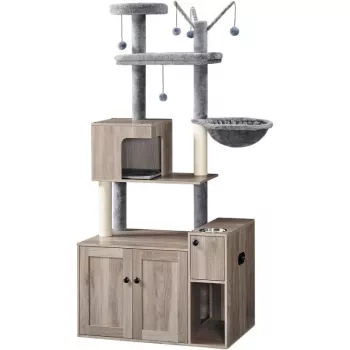
A space-smart “home base” for cats in real homes
A compact cat station can solve the everyday headaches that come with apartment living and open layouts: litter that’s visible from the couch, bowls that slide into walkways, and supplies that migrate to countertops. A multi-functional cat tree that combines vertical climbing and lounging with a hidden litter enclosure, a dedicated feeding spot, and built-in storage creates a single, consistent hub for routines—while giving cats privacy where it matters and people a cleaner-looking room.
Many feline behavior experts emphasize how consistency and environment shape daily habits. If you’re working through litter box frustrations or trying to improve routines, practical guidance from trusted sources like the ASPCA and the Cornell Feline Health Center can help you fine-tune the setup.
Why an all-in-one cat hub works better than separate pieces
Separate cat furniture, a litter cabinet, a feeding mat, and storage bins can work—but they also multiply clutter and create “in-between” zones where mess accumulates. A consolidated station typically works better because it:
- Creates clear zones for key routines: bathroom, meals, play, and rest.
- Reduces floor clutter by stacking functions vertically instead of spreading them across the room.
- Helps contain litter visibility (and can reduce some tracking) by placing the box inside an enclosure.
- Keeps bowls and supplies in consistent locations, which simplifies daily care.
- Fits especially well in studios, small homes, and open layouts where there aren’t many “hidden” corners.
What’s included in this multi-functional setup
Think of this style as a cat “command center.” Instead of buying three or four separate pieces, you get one footprint that’s meant to cover the essentials:
- A cat tree structure for climbing, scratching, and lounging.
- A litter enclosure compartment designed to hide the box and add privacy.
- A food station area that keeps bowls off walkways and helps reduce spills.
- Storage space for litter scoop, liners, wipes, food bags, and grooming tools.
- A single consolidated footprint intended to replace multiple standalone items.
Room-by-room placement ideas
Where you place an all-in-one station can make the difference between “instantly adopted” and “mysteriously ignored.” These placement ideas tend to work well:
- Living room corner: Adds vertical enrichment without leaving litter exposed. Choose a calmer corner rather than the busiest walkway.
- Laundry or mudroom: Easy cleanup and hard floors help. Add a litter mat at the enclosure exit to catch tracking.
- Bedroom: Only if ventilation is good and the litter area can be kept very clean. Some households love it; others find it disruptive.
- Near a window: A view can increase use of the perches, as long as the spot isn’t drafty and the sun doesn’t overheat the lounging level.
- Avoid tight hallways: Feeding stations in traffic paths lead to bumped bowls and stressed mealtimes.
Sizing and layout checklist before buying
Multi-function furniture is only convenient if daily access is easy. Before committing, check these practical fit points:
Quick fit check for an all-in-one cat tree station
| Category | What to measure/confirm | Why it matters |
|---|---|---|
| Footprint | Floor space where it will sit | Ensures it fits without blocking walkways |
| Access | Ability to open/slide panels and reach the litter area | Makes daily scooping and cleaning realistic |
| Litter box | Box dimensions and entry height | Prevents a mismatch that discourages use |
| Feeding zone | Bowl height and distance from litter entry | Helps keep mealtime comfortable and hygienic |
| Cat suitability | Platform size, step spacing, overall stability | Improves safety and increases use |
How cats typically use each zone
Cleaning and odor control routines that make the enclosure work
For general cat care fundamentals and home hygiene, the American Veterinary Medical Association (AVMA) is a helpful reference.
Safety and stability notes for multi-level furniture
When this style is a good (or not-so-good) match
Product spotlight: Multi-Functional Cat Tree with Litter Enclosure, Food Station & Storage
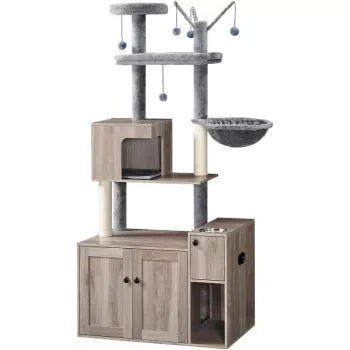
If the goal is to reduce visual clutter without sacrificing your cat’s enrichment, Multi-Functional Cat Tree with Litter Enclosure, Food Station & Storage brings play, rest, feeding, and litter privacy into one consolidated setup. It’s especially useful for establishing a repeatable flow—eat, climb, lounge, and use the litter area—without scattering supplies across multiple rooms.
For households that like to keep wipes, small bags, or grooming tools together, having a dedicated catch-all can help maintain the “everything has a place” benefit of an all-in-one station. A compact accessory option like the Calvin Klein Jeans Women’s Handbag can also function as a tidy grab-and-go carrier for non-food cat essentials (like spare waste bags or a small lint roller) when stored away from the feeding and litter areas.
FAQ
Will cats use a litter box inside an enclosure?
Many cats will, especially with a gradual transition. Start with the same box and litter, keep the entry clear, and avoid strong scents; if hesitation happens, leave the enclosure access open longer or adjust box size/entry height.
Is it okay for the food station to be near the litter enclosure?
Some cats tolerate it, but others prefer more separation. Keep bowls as far from the litter entry as the design allows, clean frequently, and monitor appetite; if eating drops, move feeding to a separate area.
How can litter tracking be reduced with an enclosed setup?
Use a textured litter mat at the exit, avoid overfilling the box, and vacuum/sweep around the station often. Low-dust litter and trimming paw fur for long-haired cats can also reduce tracking.







Leave a comment