7.5 GPM 170k BTU Indoor Tankless Gas Heater Guide
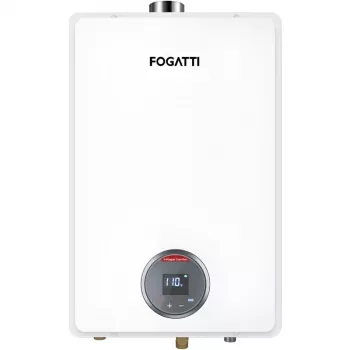
Natural Gas Tankless Water Heater (7.5 GPM, 170,000 BTU) for Indoor Instant Hot Water
A high-output indoor tankless water heater is built to deliver hot water on demand without keeping a full tank heated all day. The real-world experience, though, depends on flow rate, temperature rise, gas supply, and a correct venting plan. If you’re looking at a unit rated around 7.5 GPM with 170,000 BTU, the key is understanding what those numbers mean once winter inlet water temperatures, shower mixing, and simultaneous fixture use enter the picture. For more guidance, see APUS 5.43 GPM Natural Gas Tankless Water Heater.
For general efficiency and sizing guidance, the U.S. Department of Energy offers a solid overview of demand-type water heaters (Tankless or Demand-Type Water Heaters), and ENERGY STAR explains performance factors and product types (ENERGY STAR — Water Heaters). For further reading, see Chapter 5 – Water Heating – California Energy Commission.
What 7.5 GPM and 170,000 BTU mean for everyday hot water
Flow rate (GPM) is the maximum volume of hot water the heater can produce under specific conditions. The number on the label isn’t a guarantee for every home because incoming water temperature and your chosen outlet setpoint determine how much heating has to happen per gallon. In practical terms, a warmer inlet temperature lets the unit deliver closer to its rated flow; a colder inlet temperature reduces usable hot-water flow at the same setpoint.
The 170,000 BTU rating reflects how much heating power is available. More BTUs generally support stronger performance during a bigger temperature rise—exactly the scenario you run into in cold climates, in winter months, or when the setpoint is higher (for example, 125°F instead of 120°F).
Because this is an indoor natural-gas appliance, venting and combustion air matter as much as the rating. Vent length, termination location, and access for future service all influence how smoothly the installation goes—and how reliable the heater is over time. Done right, this capacity class is often a strong fit for households that want back-to-back showers, a steady sink temperature while another fixture runs, and no “tank recovery” lag.
Quick sizing reality check: temperature rise vs usable flow
| Incoming water (°F) | Outlet setpoint (°F) | Temperature rise (°F) | Usable flow expectation |
|---|---|---|---|
| 60 | 120 | 60 | Higher usable GPM; supports more simultaneous fixtures |
| 50 | 120 | 70 | Moderate usable GPM; simultaneous use may need prioritizing |
| 40 | 120 | 80 | Lower usable GPM; expect reduced simultaneous shower capacity |
| 35 | 125 | 90 | Lowest usable GPM; plan fixture scheduling or consider higher capacity |
How to estimate required GPM for your home
Start by listing what you actually do at the same time during the busiest part of the day—morning routines are the best “stress test.” A common peak scenario is one shower running while someone uses a bathroom sink, plus intermittent dishwasher or clothes-washer fills.
- Typical flow ranges: shower 1.5–2.5 GPM, bathroom faucet 0.5–1.5 GPM, kitchen faucet 1.0–2.2 GPM.
- Appliance fill periods: dishwasher 1.0–1.5 GPM, clothes washer 1.5–3.0 GPM (varies by model and cycle).
- Remember mixing: the heater supplies hot water that blends with cold at the fixture. When incoming water is colder, you generally need a larger fraction of hot water to reach a comfortable shower temperature.
- Winter reality: if you plan to run multiple showers at once, expect fewer “simultaneous shower equivalents” when the inlet temperature drops.
If you already know your showerhead flow (many are labeled, and some are 1.75 GPM or 2.0 GPM), that’s the fastest way to sanity-check whether your household peak demand is closer to “one shower plus light extra use” or “two showers plus another draw.”
Indoor installation checkpoints that impact performance and safety
Comfort features to look for in daily use
Maintenance expectations and long-term operating costs
Product snapshot: 7.5 GPM, 170,000 BTU indoor tankless model
Featured in-stock picks
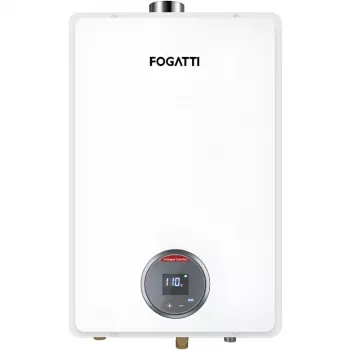
- Natural Gas Tankless Water Heater, 7.5 GPM, 170,000 BTU, Indoor, Instant Hot Water
- Calvin Klein Jeans Women’s Handbag
- Calvin Klein Men’s Plain Blue Polo Shirt
FAQ
How many showers can a 7.5 GPM natural gas tankless water heater run at once?
Many showerheads use about 1.5–2.5 GPM, but the number of simultaneous showers depends on how cold the incoming water is and what outlet temperature you set. In mild-to-moderate conditions it may handle two showers, while in colder winter inlet temperatures you may need to prioritize one strong shower plus a smaller draw.
Is 170,000 BTU enough for an indoor tankless water heater in cold climates?
It can be, but cold-climate performance hinges on temperature rise: colder inlet water reduces the maximum hot-water flow the unit can sustain at a given setpoint. Estimate your winter inlet temperature and compare the hot-water demand you want to run at once, while also confirming your gas line and meter can supply the required load.
How often should an indoor tankless water heater be descaled?
Descaling frequency depends on water hardness and how much hot water you use; many households do it periodically, often annually in moderate hardness and more often in hard water areas. Keeping scale under control helps maintain efficiency, stable temperature, and consistent flow.








Leave a comment