4-in-1 Budgeting Toolkit: Excel Plan, Track & Save
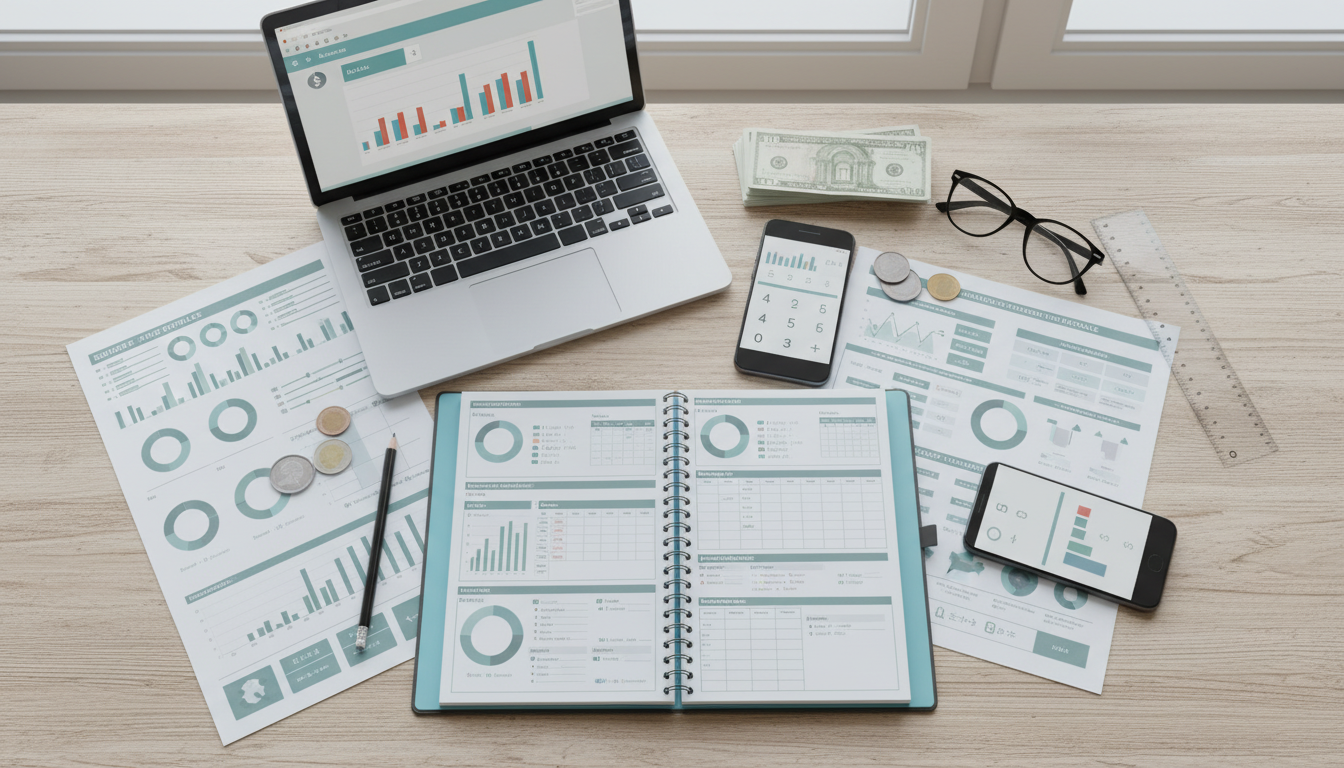
The Empowered Budgeting Toolkit: A 4-in-1 System for Monthly Clarity
A budget works best when it’s simple enough to use consistently and structured enough to show what to do next. The Empowered Budgeting Toolkit is a 4-in-1 bundle designed to turn monthly numbers into practical decisions: track expenses, plan savings, build a repeatable system in Excel, and reinforce the mindset needed to stick with the plan—especially when motivation dips.
If you’ve ever started strong and then avoided your budget after a few “off” days, this toolkit is built to keep you moving forward with a plan you can reuse every month, not a one-time reset.
What’s Included in the 4-in-1 Bundle
- Budget planner components focused on monthly planning and expense visibility so spending decisions are made before money leaves the account.
- An Excel guide that supports a spreadsheet-based workflow for people who prefer formulas, dashboards, and quick updates over manual calculations.
- Savings and wealth strategy guidance that connects day-to-day categories to longer-term goals (emergency fund, debt payoff, investing, sinking funds).
- Guided affirmations for wealth to reinforce consistency, reduce avoidance around money check-ins, and support identity-based habit change (showing up even when it’s not perfect).
- A unified system for planning, tracking, review, and mindset support—so budgeting doesn’t rely on willpower alone.
Shop the complete system here: The Empowered Budgeting Toolkit (4-in-1 Bundle).
Who This Toolkit Fits Best
- Busy planners who want a predictable monthly routine (setup, weekly check-in, month-end review) instead of constant recalculations.
- Excel users who want guided structure rather than starting from a blank spreadsheet or patching together random templates.
- Anyone rebuilding confidence after overspending cycles—where shame or avoidance makes it hard to look at statements.
- Goal-driven savers who want their budget to actively support travel funds, education, a home down payment, or investing milestones.
- People who like prompts and a repeatable system rather than reinventing categories and rules each month.
For foundational budgeting best practices and consumer tools, the Consumer Financial Protection Bureau (CFPB) budgeting resources are a strong reference point to pair with a structured monthly routine.
A Simple Monthly Flow to Use the Toolkit
1) Month setup (30–45 minutes)
List known bills, set target amounts for variable categories, and assign savings targets first (pay-yourself-first). This keeps goals from becoming “whatever’s left.”
2) Weekly money check-in (10–15 minutes)
Update transactions, compare actual vs. planned, and choose one adjustment: reduce spending, delay a purchase, or reallocate from a lower-priority category.
3) Mid-month correction
If a category is running hot, use a rule-based move: pause non-essentials, cap dining, or switch one category to a cash-envelope style limit to slow the leak.
4) End-of-month review (20–30 minutes)
Total spending by category, highlight what worked, name one friction point, and set one improvement for next month. The goal is fewer surprises, not a perfect month.
5) Mindset layer
Pair check-ins with guided affirmations to reduce the “I’ll do it later” loop and keep the budget aligned with values rather than guilt.
Monthly Expense Tracking That Actually Changes Outcomes
| Category group | What it covers | How to set the target | Common adjustment lever |
|---|---|---|---|
| Fixed essentials | Rent/mortgage, insurance, minimum debt payments | Use statements and contracts | Renegotiate, refinance, downgrade plans |
| Variable essentials | Groceries, fuel/commute, basic household | Start with last 2–3 months average | Meal plan, consolidate trips, set weekly caps |
| Financial goals | Emergency fund, sinking funds, investing | Set first; treat as a bill | Automate transfers on payday |
| Lifestyle flex | Dining, entertainment, shopping | Assign what’s left after goals | Use a hard cap; cash-style limit |
| Future you | Learning, side projects, health upgrades | Small intentional line item | Swap one low-value habit for this |
Savings and Wealth Strategies You Can Apply Immediately
If investing is part of your plan, use plain-language education to stay grounded in the basics: SEC Investor.gov’s saving and investing resources.
If you’re adjusting paycheck withholding to improve monthly cash flow, the IRS Withholding Estimator can help you plan with fewer surprises.
Guided Affirmations for Wealth: Making Consistency Easier
Getting Started in One Weekend
Reward Progress Without Derailing the Plan
- Calvin Klein Jeans Women’s Handbag (a defined, one-time purchase that can be saved for intentionally)
- Calvin Klein Men’s Plain Blue Polo Shirt (a practical upgrade that fits well in a “planned replacement” sinking fund)
FAQ
Is this toolkit better for beginners or for experienced budgeters?
It works for both: beginners get structure, prompts, and a clear monthly rhythm, while experienced budgeters benefit from the Excel workflow, review cadence, and the integration of strategy plus mindset support.
How much time does monthly budgeting take with this system?
Plan on 30–45 minutes for month setup, 10–15 minutes for each weekly check-in, and 20–30 minutes for a month-end review. As you automate transfers and standardize categories, the process tends to get faster and easier.
Can the system work if income is irregular or seasonal?
Yes—start with a baseline budget built on your lowest expected month and prioritize essentials first. As higher-income weeks arrive, allocate the surplus to a buffer and sinking funds so uneven income doesn’t create uneven stress.










Leave a comment