85-Inch Double Dog Crate Console With Sliding Doors
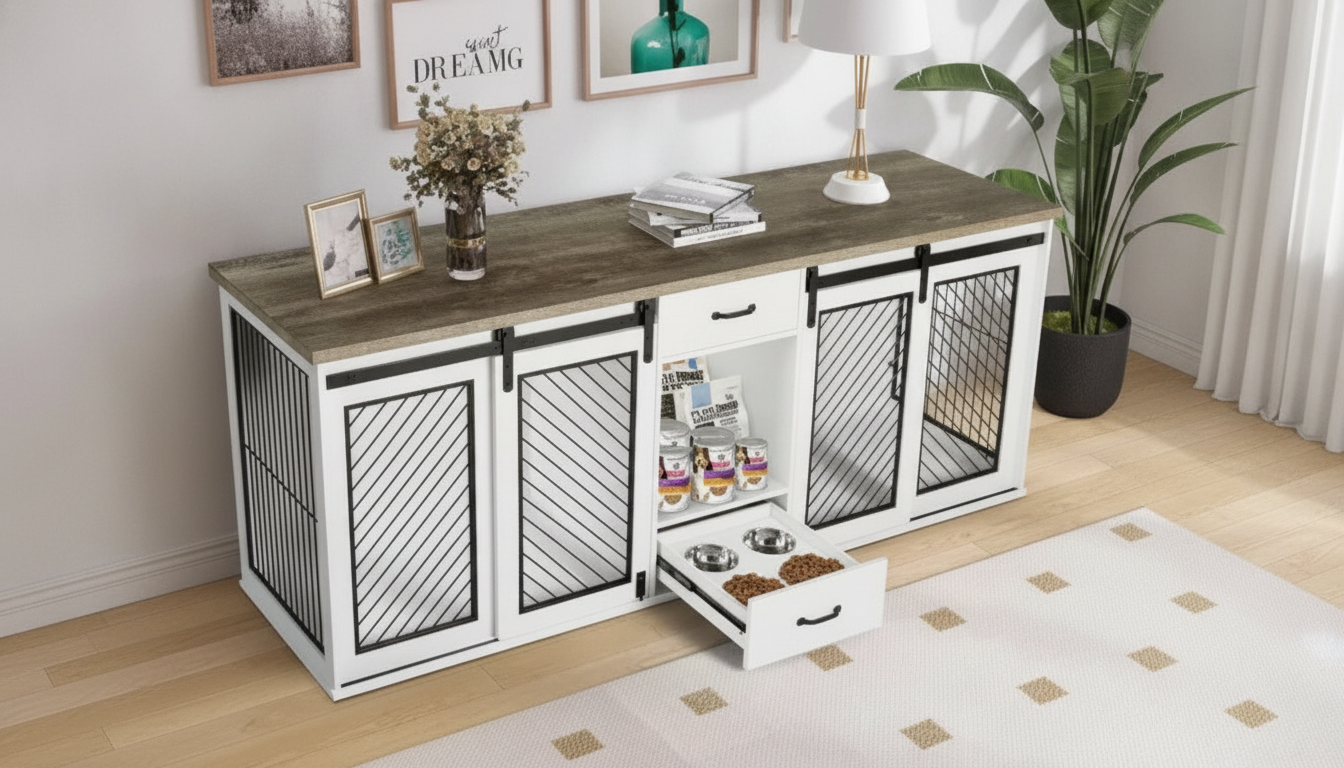
A double dog crate that also works as furniture can simplify daily routines while keeping the home looking tidy. This 85-inch design combines two side-by-side resting spaces with sliding doors, a built-in feeding station, and a drawer for supplies—aimed at multi-dog households that want containment, comfort, and organization in one piece.
What This Piece Solves for Two-Dog Homes
- Creates two defined personal spaces to reduce resource guarding and boundary issues between dogs.
- Consolidates crate time, feeding, and storage into one footprint to declutter bowls, bins, and spare crates.
- Functions as a furniture-style console so it can live in a main room without looking utilitarian.
- Sliding doors help in tighter rooms where swing-out doors would hit furniture or block walkways.
For households juggling different schedules, training stages, or feeding speeds, a two-compartment setup makes it easier to separate dogs briefly without isolating them in different rooms. The result is often a calmer daily flow—especially during high-excitement moments like deliveries, guests, and mealtimes.
Layout and Everyday Use
- Two-compartment setup supports separate rest time, separate feeding, and easier management during visitors or deliveries.
- Sliding door access can make it simpler to guide dogs in/out without stepping back for clearance.
- Integrated bowls keep feeding in a consistent spot, supporting routines and reducing wandering during meals.
- Top surface can serve as a console for decor or essentials (keeping items away from chewing or nosy noses).
In busy living rooms, the most practical advantage is how “one station” replaces multiple pet zones. Instead of a crate in one corner, bowls in another, and a tote of supplies somewhere else, everything stays centralized. Sliding doors also help keep paths clear in narrower spaces, since there’s no door swing to manage when opening and closing.
Key Features at a Glance
If you’re considering the 85″ Sliding Door Double Dog Crate Furniture with Bowls and Drawer, these are the features that tend to matter most in day-to-day use.
| Feature | Why It Matters | Best For |
|---|---|---|
| Double compartments | Separates dogs when needed; supports calmer downtime | Multi-dog households, fostering routines |
| Sliding doors | Reduces clearance needs in tight spaces | Apartments, hallways, living rooms |
| Integrated bowls | Keeps feeding area consistent and contained | Mess management, routine-based feeding |
| Drawer | Stores supplies out of sight but close at hand | Daily-use items: treats, leashes, grooming |
| Furniture-style top | Allows the crate to function like a console table | Main living areas, open floor plans |
Fit, Placement, and Room Planning
- Measure the intended wall space and allow room for dogs to enter/exit comfortably at the front.
- Choose a location with airflow and stable temperature; avoid direct heater blasts or constant sun exposure.
- Keep the unit away from high-traffic pinch points so dogs can rest without being startled.
- Place near an easy-to-clean floor area (especially helpful with water bowls).
- If using it as a console, keep decor lightweight and secure to prevent falls when dogs bump the unit.
Room planning is less about aesthetics and more about predictability. A well-placed crate-furniture unit becomes a stable “home base,” which helps many dogs settle faster. If your dogs are easily startled, position the crate so the doors don’t face the busiest walkway, and consider leaving a little space behind the unit to reduce wall scuffs and improve airflow.
Feeding Station and Bowl Care
- Wash bowls frequently and sanitize on a regular schedule to reduce bacterial buildup.
- Use non-slip mats or liners if needed to reduce splashes and vibration noise.
- If one dog eats faster, consider supervised feeding or staggered meals to prevent bowl switching.
- Monitor posture while eating; consult a veterinarian if there are signs of discomfort, coughing, or repeated regurgitation.
Built-in bowls keep meals consistent, but consistency only helps when cleaning stays consistent too. A simple rhythm works well: rinse and wash after each meal (especially with wet food), wipe the surrounding area, and do a weekly deeper clean of the feeding zone. For general pet health guidance and daily care considerations, the AVMA Pet Owner Resources is a reliable reference.
Drawer Storage: What to Keep Handy
- Training treats, clicker, and a small pouch for quick reinforcement.
- Leashes, harnesses, and ID tag extras for grab-and-go walks.
- Grooming basics: brush/comb, nail grinder, wipes, paw balm.
- Cleanup essentials: waste bags, enzyme cleaner, lint roller.
- Health items: flea/tick comb, medication organizer (kept in a secure container).
Comfort and Crate Training Basics
Even when a crate looks like furniture, the training fundamentals stay the same: slow introductions, short wins, and a steady routine. If you want a refresher on step-by-step crate training methods, see the American Kennel Club’s crate training guidance and the ASPCA’s crate training overview.
Cleaning and Maintenance Routine
Who This Style Tends to Work Best For
More In-Stock Picks
- 85″ Sliding Door Double Dog Crate Furniture with Bowls and Drawer
- Calvin Klein Women’s V-Neck T-Shirt – Stylish Fall/Winter Essential
- Vivienne Westwood Linen Pants
FAQ
Can two dogs share a double crate furniture unit safely?
Two separate compartments are typically safer than co-housing in one space. Confirm each dog has its own area, monitor behavior for stress or guarding, and avoid forcing proximity if either dog shows discomfort.
Are sliding crate doors secure enough for daily use?
They can be, but security depends on the latch design and routine checks. Make sure the doors glide smoothly, keep tracks clean, and verify the lock fully engages before leaving dogs unattended.
How often should the bowls and feeding area be cleaned?
Wash bowls daily (and more often if wet food is used), wipe splashes after meals, and do a deeper clean weekly. Use pet-safe cleaners and let everything dry completely before the next meal.









Leave a comment