Black Brass Pull-Out Kitchen Faucet with Magnetic Dock
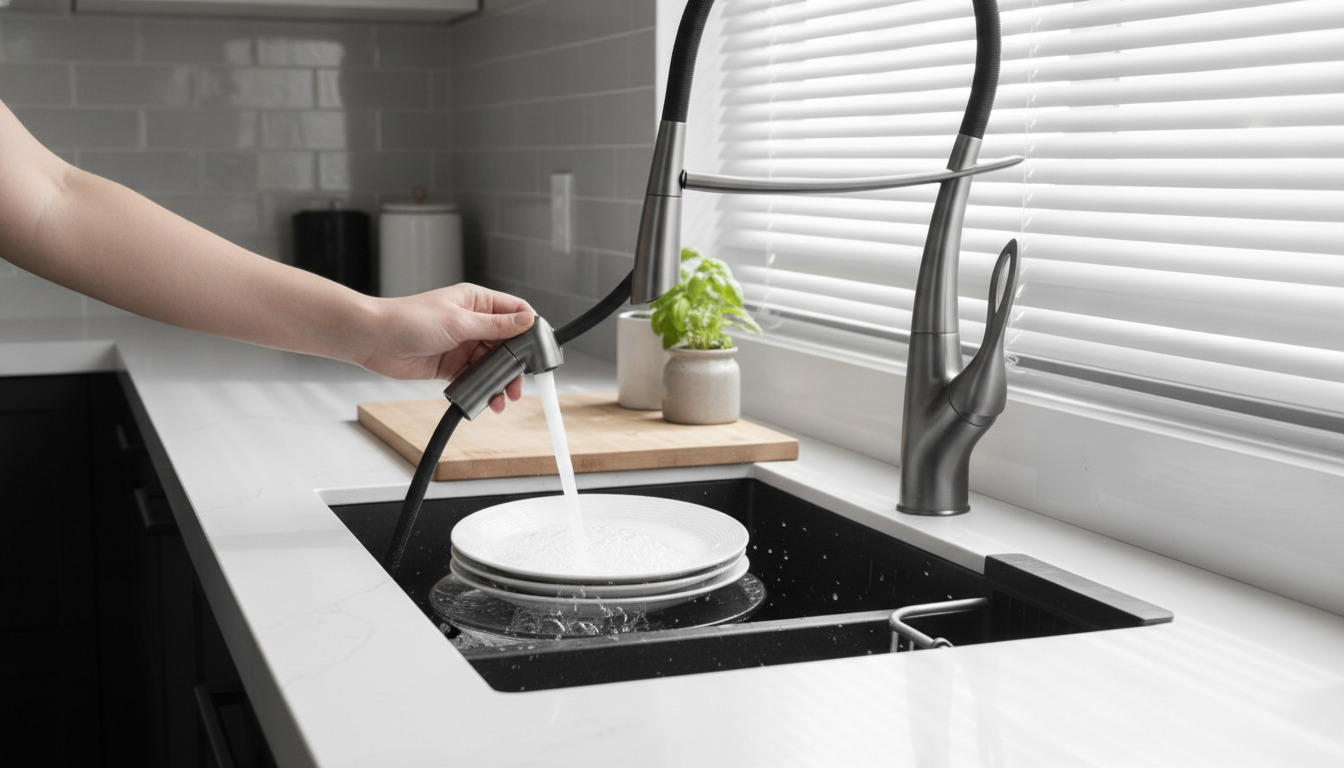
Luxury Black Brass Kitchen Faucet with Pull-Out Magnetic Suction: Design, Control, and Everyday Performance
A standout kitchen faucet should do more than look good—it should rinse quickly, dock cleanly, and hold up to daily use. This luxury black brass model pairs a bold finish with a pull-out sprayer and magnetic suction docking, aiming to deliver a more controlled, less fussy workflow at the sink.
What Makes a Faucet Feel “Luxury” in Daily Use
“Luxury” shows up most clearly in the moments repeated dozens of times a day: turning the handle with wet hands, rinsing stuck-on food, and snapping the sprayer back into place without thinking about it.
- Material confidence: Solid-feeling construction and a finish that resists visible wear in high-touch areas help the faucet stay looking intentional instead of tired.
- Comfortable control: Smooth handle action and stable temperature/flow adjustments reduce the “too hot/too cold” back-and-forth.
- Useful features (not gimmicks): Pull-out reach, consistent spray, and a dock that re-centers the sprayer every time are practical upgrades you’ll actually use.
- Visual cohesion: A faucet can act like an anchor—tying together cabinet hardware, sink style, and lighting for a finished look.
If water efficiency matters in your home, it’s also worth reviewing the basics of smart water use and efficient fixtures through EPA WaterSense.
Black Brass Finish: Why It Works in Modern and Classic Kitchens
Black brass lands in a sweet spot: it reads bold like matte black, but keeps warmth and depth that can feel more “designed” than plain black hardware.
- High-contrast, still warm: It pops against white, stone, or stainless sinks while maintaining a premium feel.
- Flexible with mixed metals: Pair it with matte black pulls, brass accents, or a deliberate mixed-metal palette—especially when at least one other element repeats the tone.
- Less of the always-smudged effect: Compared with high-polish finishes, darker brushed looks often disguise fingerprints and minor water marks (water hardness still plays a role).
- Big impact without a remodel: Upgrading the faucet can shift the whole sink zone—especially if the faucet sits under a prominent pendant or in front of a backsplash feature.
Pull-Out Sprayer + Magnetic Suction Docking: Practical Benefits
A pull-out faucet is about speed and accuracy: less splashing, fewer awkward angles, and faster transitions between tasks.
- Faster cleanup: Direct the spray where it’s needed—around drain baskets, sink corners, and large pans that don’t fit neatly under a fixed stream.
- Reliable retraction: Magnetic suction docking guides the sprayer head back to its resting position, reducing the need to “fix” it after each use.
- Less droop over time: A strong, consistent dock helps prevent the sprayer from sitting slightly off-center, which can make even a clean kitchen look unfinished.
- Better control for daily routines: Rinsing produce, washing tall bottles, or filling an oversized stockpot becomes simpler when the hose reach and spray direction are predictable.
For households that pay attention to drinking-water component safety and standards, it’s helpful to understand what certifications like NSF/ANSI 61 are designed to address.
Key Checks Before Buying (Fit, Function, and Plumbing)
Even a beautiful faucet can disappoint if it doesn’t fit the sink deck, clears the backsplash, or has a hose that snags under the cabinet. A few quick measurements up front can prevent most installation-day surprises.
- Mounting compatibility: Confirm sink/countertop hole configuration and whether an escutcheon plate is needed.
- Spout reach and height: Make sure there’s comfortable clearance for tall cookware and enough reach to access the center of the bowl.
- Handle swing: Verify the handle won’t hit a backsplash, wall, or window ledge during operation.
- Hose length and routing: Ensure the pull-out hose can move freely without rubbing shutoff valves, the disposal, or sharp edges.
- Water conditions: Hard water may mean more frequent wiping; plan a simple routine to keep the finish looking crisp.
Quick pre-install checklist
| What to measure/check | Why it matters | How to verify |
|---|---|---|
| Number of mounting holes | Avoids extra drilling or mismatched hardware | Count holes at sink deck or countertop; check if an escutcheon plate is needed |
| Clearance behind faucet | Prevents handle/backspash collisions | Measure from hole center to backsplash/window ledge |
| Spout height + reach | Improves washing and filling comfort | Measure sink depth and typical cookware height |
| Pull-out hose path | Ensures smooth extension and retraction | Look under sink for obstacles; allow slack and a clean arc |
| Shutoff valves condition | Reduces leak risk during installation | Inspect for corrosion; consider replacing aging valves |
Care and Maintenance for a Black Brass Faucet
A black brass finish can stay striking for the long run when it’s treated gently and kept clear of mineral buildup.
When This Faucet Is the Right Choice
Featured In-Stock Picks
- Luxury Black Brass Kitchen Faucet with Pull-Out Magnetic Suction — a design-forward faucet built around pull-out reach and magnetic docking.
- Calvin Klein Women’s V-Neck T-Shirt – Stylish Fall/Winter Essential — a clean, everyday staple with an easy-to-layer profile.
FAQ
How does magnetic docking help compared with a standard pull-out faucet?
Magnetic docking guides the sprayer head into place so it seats consistently after each use. This reduces misalignment and helps the head stay docked even after frequent pull-outs and quick retractions.
Is a black brass kitchen faucet hard to keep clean?
It’s usually straightforward with a quick daily wipe using a soft cloth and gentle cleaner. Hard water can increase spotting, and occasional aerator rinsing helps keep flow and spray performance consistent.
What should be checked before installing a pull-out kitchen faucet?
Confirm mounting hole count, clearance behind the handle, and the spout’s reach/height for your sink. Also check under-sink hose routing for snags and inspect shutoff valves so installation doesn’t introduce leaks.











Leave a comment